Executive summary
A large media organization had innovation intent but no shared operating model. Work with the four I8N founders defined purpose, mission, governance, and a repeatable execution rhythm across leadership and delivery teams.
Result: Innovation shifted from fragmented initiatives to a visible internal advisory function with quarterly OKRs, shared language, and recurring leadership engagement.
Key outcomes
- Established a clear strategic foundation: purpose, vision, mission, and value system
- Introduced quarterly OKRs to connect innovation intent with measurable execution
- Built a common innovation language used across departments and leadership contexts
- Expanded I8N into a trusted advisory partner for transformation and early AI topics
Innovation capability maturity trajectory
System map from executive intent to institutionalized innovation capability
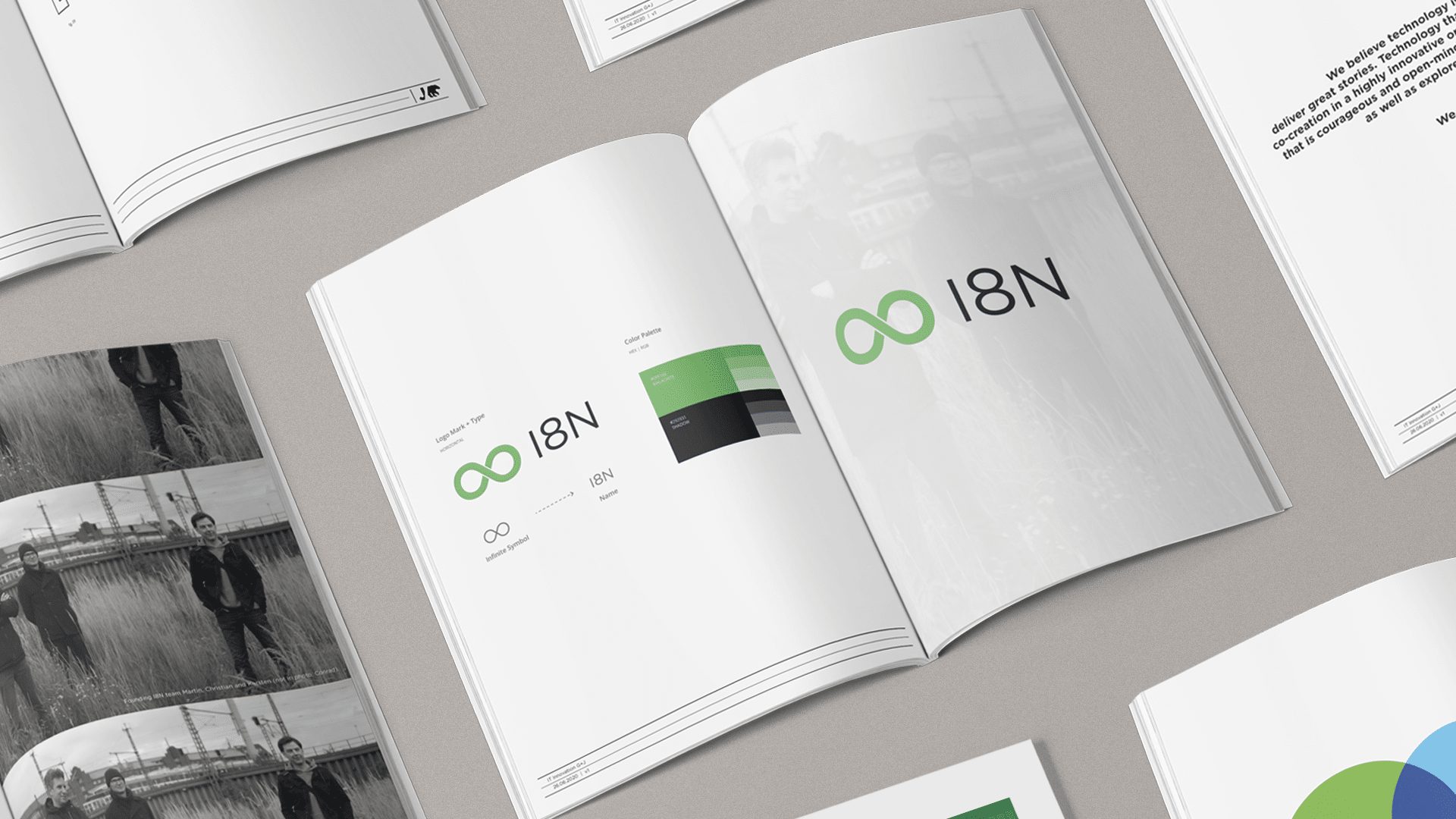
I8N for Gruner + Jahr
Gruner + Jahr — internal innovation capability design and activation
Key metrics

4
Founders who initiated and shaped I8N

QBR
Quarterly OKR cadence introduced for execution

3
Strategic anchors codified: purpose, vision, mission

1
Internal advisory function institutionalized
- Client
- Gruner + Jahr
- Role
- Innovation Lead & Operating Model Design
- Timeline
- 2017–2019
- Industry
- Media / Publishing
- System
- Innovation
- Domain
- Organization
- Design Lever
- Purpose
- Primary Outcome
- Capability
- Framework
- Innovation Operating System
Challenge
Gruner + Jahr had innovation intent distributed across departments, but no shared operating model to convert that intent into sustained capability. Initiatives launched without portfolio governance, quarterly OKR rhythm, or a common language for prioritization. Executive turnover and matrix complexity amplified the gap: each new leader brought a new framing, while delivery teams continued ad hoc experimentation without institutional memory. The four I8N founders recognized that innovation workshops produced energy but not capability — and that without governance, alignment, and execution cadence, the organization would keep restarting rather than compounding. The business problem was organizational: how to make innovation a repeatable function inside a legacy media house facing digital transformation, regulatory pressure, and cultural resistance to portfolio discipline.
Solution
I designed and activated an Innovation Operating System for Gruner + Jahr — a structured model connecting executive intent to institutionalized innovation capability. My role combined operating model design, facilitation, and narrative systems: I codified purpose, vision, mission, and values as strategic anchors; introduced quarterly OKR cadence with measurable review points; built cross-functional alignment rituals; and established I8N as an internal advisory function for transformation and early AI topics. The system had five layers — executive alignment, strategic foundation, operating rhythm, execution methods, and narrative systems (image film, podcast, shared language) — each reinforcing the others. I facilitated leadership workshops, synthesized stakeholder interviews into decision records, and ensured innovation moved from fragmented initiatives to governed portfolio bets with visible progress signals. The output was not a deck; it was an operating model executives could understand and teams could execute.
Context
Legacy media organizations in Germany face a familiar constraint set: regulatory frameworks, unionized structures, editorial culture resistant to "innovation theatre," and digital transformation mandates from group leadership. Gruner + Jahr operated within Axel Springer's broader IT strategy, requiring I8N to align with group-level priorities while maintaining editorial identity. The innovation function competed for attention with core publishing operations, cost pressures, and the urgency of AI adoption. Stakeholders ranged from C-suite sponsors to department heads sceptical of another transformation programme. Market conditions demanded capability building, not proof-of-concept showcases — investors and group leadership wanted evidence that innovation could survive beyond individual champions.
Evidence
I8N institutionalized as a trusted internal advisory function with quarterly OKR execution rhythm and recurring leadership engagement. Cross-functional alignment improved through structured review cycles; innovation initiatives moved from ad hoc launches to governed portfolio bets. Martin von Allesch, AI Lead and I8N Co-lead, reported significant overlap between I8N's direction and group IT strategy — evidence of executive alignment at the systems level. Narrative outputs (image film, podcast, internal storytelling) created shared language across departments. The operating model survived leadership transitions because it was encoded in cadence and governance, not individual relationships.
Framework
Innovation Operating System
The Innovation Operating System channels strategic priorities, cross-functional teams, quarterly OKRs, and a portfolio of bets through an innovation operating model with execution rhythm, alignment cadences, and portfolio governance — producing innovation capability, cross-functional alignment, and measurable portfolio progress. I8N proved that media organizations can design innovation as an operating system, not a project office.
Inputs
Core System
Innovation operating model with execution rhythm, alignment cadences, and portfolio governance
Outputs
Principles
- Innovation operating models fail when OKRs are set annually but reviewed never — cadence is the mechanism that converts intent into capability.
- Purpose without execution rhythm produces workshops and slide decks, not organizational learning.
- Executive alignment is a system output measured through decision coherence, not a one-time offsite exercise.
- Narrative systems are infrastructure: shared language reduces the coordination cost of every subsequent initiative.
Research context
Draws on innovation management practice (portfolio governance, OKR cadence, ambidextrous organization design) and facilitation methods from systems thinking — applied inside a matrixed publisher where innovation must coexist with daily editorial operations.