Executive summary
Language learning platforms still treat every learner the same — generic lists, standardized drills, no connection to personal experience. As co-founder and product director, the work reframed the category question: how to deliver one-to-one relevance at digital scale.
Result: Photo-anchored vocabulary experiences. ML-generated personalized lessons. A consumer app shipped on the Apple App Store — validating that personalization can be the core product, not a feature bolt-on.
Key outcomes
- Defined a product vision connecting cognitive science, AI, and mobile-first learning behavior
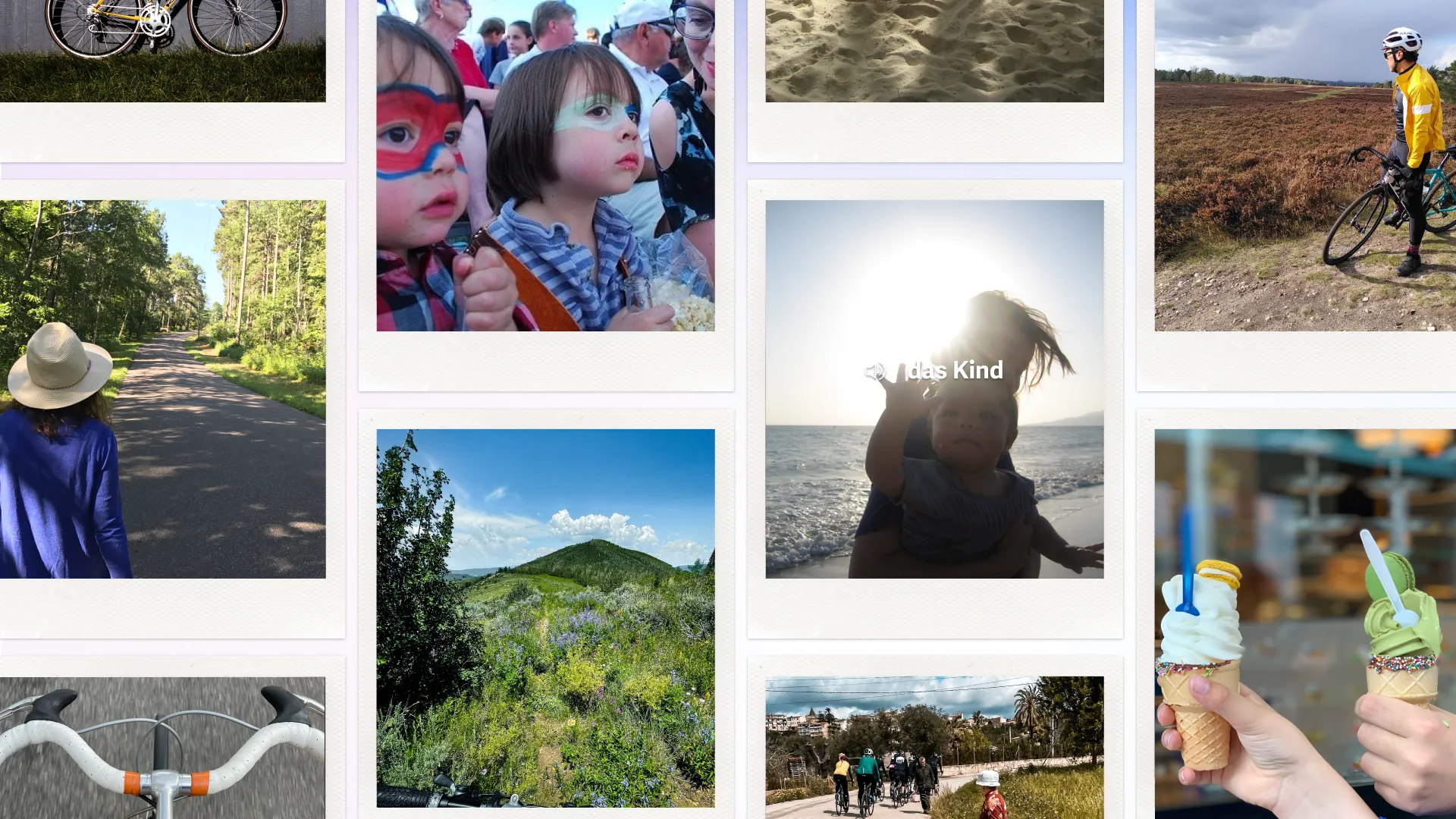
- Shipped vocabulary experiences anchored to personal photographs instead of generic word lists
- Used machine learning to generate individualized content without manual lesson creation per learner
- Launched on the Apple App Store — moving personalized learning from research hypothesis to usable product
Hello, World! Learning Operating System
How Hello, World! turns personal photos into scalable, individualized vocabulary learning

HELLO, WORLD! — LEARNING OPERATING SYSTEM

Research foundations
Context-dependent memory

Spaced retrieval

ML lesson generation

Personal Learning Engine

Learner context
- Personal photographs
- Life memories & travel
- Daily experiences
- Individual vocabulary gaps


Hello, World! stack
- ML-generated lessons
- Photo-anchored content
- iOS consumer app
- Personalization at scale

In-app learning loop
Photo context

Vocabulary capture
Spaced retrieval

Reflection
Learner outcomes
 Learning anchored to real life
Personalized vocabulary learning — shipped to the App Store
Hello, World!
Abbett Labs — personalized vocabulary learning at mobile scale
Key metrics
Photos
Personal memories used as contextual vocabulary anchors
ML
Machine learning for individualized lesson generation at scale
2020
Year co-founded and shipped to the Apple App Store
4
Core principles: context, augmentation, simplicity, and scalable personalization
- Client
- Abbett Labs
- Role
- Co-founder & Product Director
- Timeline
- 2018–2021
- Industry
- Education / EdTech
- System
- Human Learning
- Domain
- Education
- Design Lever
- Personalisation
- Primary Outcome
- Retention
- Framework
- Human Learning System
Challenge
Consumer language-learning products treat every learner the same. Vocabulary arrives as generic word lists and standardized drills, disconnected from the memories, places, and experiences that make words stick. Retention suffers not because learners lack motivation, but because the material feels abstract — studied in isolation from lived context. For Abbett Labs, the business problem was sharper: the category rewards scale through standardization, yet the science of memory rewards personalization. Building a consumer product that could deliver one-to-one relevance without a tutor for every learner meant rethinking the product architecture from the ground up — not bolting personalization onto an existing curriculum engine.
Solution
I co-founded Abbett Labs and led product strategy to design a Human Learning System — a product architecture where personalization is the core mechanism, not a premium feature. The approach anchored vocabulary to personal photographs: learners capture words in the context of their own lives, and machine learning generates individualized lessons at scale. My role spanned product vision, learning experience design, and go-to-market narrative — translating cognitive science principles into a mobile product language investors and App Store reviewers could evaluate. I defined the learning loop (photo context → vocabulary capture → spaced retrieval → reflection), shaped the ML-assisted content pipeline, and positioned the product as evidence that scalable education does not require standardized education. The system made retention measurable: every lesson tied to personal context, every session generating signals the engine could adapt to.
Context
Consumer education sits at a volatile intersection — cognitive science on one side, mobile behaviour and AI-assisted content generation on the other. Abbett Labs entered a market dominated by established players with massive content libraries and brand recognition. The team was small, the runway finite, and the hypothesis ambitious: that photo-anchored, ML-generated lessons could ship as a polished consumer experience, not a research prototype. Investor conversations and App Store launch required a product narrative that could survive scrutiny from both financial and pedagogical angles. The competitive landscape rewarded daily engagement metrics; the scientific literature rewarded context-dependent encoding and spaced practice. The strategic question was how to make those forces align in a single product architecture.
Evidence
The product shipped on the Apple App Store, validating the core hypothesis: personalized vocabulary learning could move from research concept to usable consumer experience. Photo-anchored lessons replaced generic word lists. Machine learning generated individualized content without manual lesson creation per learner. KPIs tracked engagement against generic-list benchmarks, retention across spaced-retrieval intervals, and the ratio of learner-generated context to system-generated drills. The launch demonstrated that personalization at the architectural level — not the marketing level — could sustain a consumer product in a crowded category.
Framework
Human Learning System
The Human Learning System maps learner profile, vocabulary goals, usage patterns, and spaced-repetition intervals through an adaptive learning engine to retained vocabulary, learning habits, and measurable individual progress. Inputs are behavioural and contextual; the core system personalises content delivery based on retention signals; outputs are durable learning outcomes, not session metrics. This framework emerged from Hello, World! as a reusable model for any engagement where individual context determines whether information sticks.
Inputs
Core System
Adaptive learning engine that personalises content delivery based on retention signals
Outputs
Principles
- Personalization without retention measurement is experimentation, not strategy — design the feedback loop before the feature roadmap.
- Learning systems should anchor content in lived experience; generic curricula optimize for content production, not memory formation.
- AI belongs in the learning engine that adapts delivery — not as language on the landing page that promises intelligence the product cannot demonstrate.
- Consumer education products must reconcile cognitive science with distribution economics; the architecture is where that reconciliation happens.
Research context
Grounded in context-dependent memory, spaced retrieval, and adaptive pathway design — principles from cognitive science applied to consumer product architecture. The engagement tested whether established findings on encoding specificity and distributed practice could survive the constraints of mobile UX, ML inference cost, and App Store discovery.