
Hello, World!

Personalized Learning: Learning at Human Scale

Abbett Labs | Co-founder | 2020

Challenge

Education systems have largely been designed around standardization. The industrial model of education prioritized scale and efficiency by creating shared curricula, common materials, and consistent learning paths. While this approach enabled broader access to education, it often overlooked one of the most important factors in effective learning: individual context.

Research in cognitive science has shown that people learn more effectively when new information connects to existing knowledge, personal experiences, and meaningful associations. Yet most learning platforms continue to rely on generic content and standardized exercises that treat every learner the same.

Language acquisition highlights this challenge. Vocabulary is foundational to learning a new language, but traditional approaches often rely on memorization techniques that separate words from the experiences and contexts that make them easier to remember. Learners are expected to absorb large volumes of information without a personal connection to the material.

The strategic question behind Hello, World! was:

How can technology enable the benefits of personalized teaching while maintaining the scalability of digital learning?

The opportunity was not simply to create another language-learning application. It was to explore a broader shift from standardized education toward personalized learning experiences that adapt to the individual.
Solution

Hello, World! was created to explore how artificial intelligence, cognitive science, and mobile technology could enable personalized learning at scale.

As co-founder and product director, Jeremy defined the product vision and strategy, translating research around memory, personalization, and learning behavior into a consumer-facing experience.

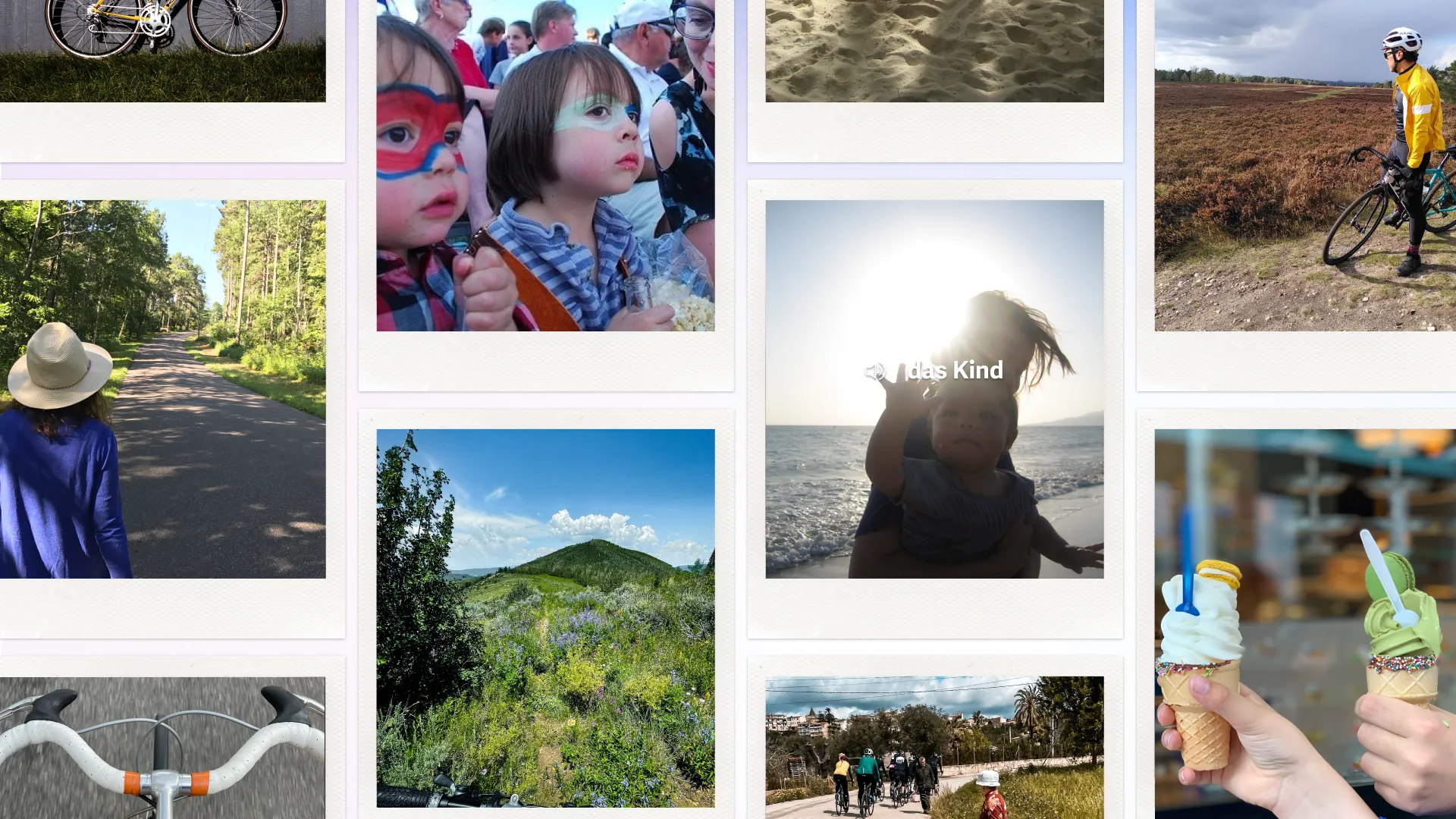
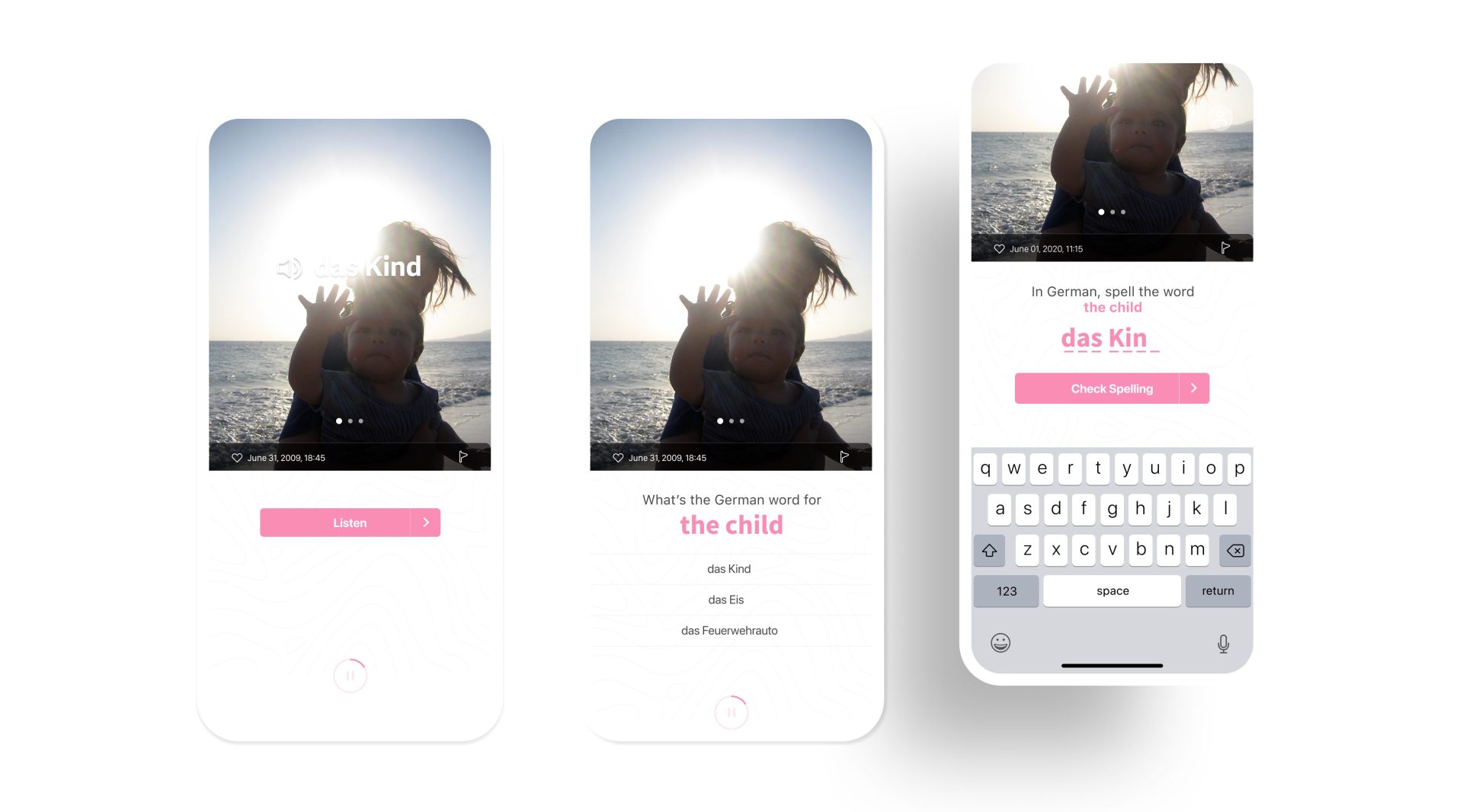
The product focused initially on vocabulary acquisition, using personal photographs as contextual anchors for learning new words. Instead of presenting learners with generic vocabulary lists, Hello, World! connected language to moments, places, and experiences that were already meaningful to the individual.

This approach changed the role of technology in learning. Rather than simply delivering more educational content, the platform used technology to create greater relevance between the learner and the material.

Machine learning supported the generation of personalized learning content, reducing the manual effort traditionally required to create individualized educational experiences. A mobile-first design allowed learning to happen naturally throughout daily life, turning personal experiences into opportunities for language development.

The product strategy was built around several principles:

  • Personal context improves learning relevance
  • Technology should support human learning rather than replace human instruction
  • Personalization should increase engagement without adding complexity
  • Scalable education does not need to mean standardized education

Hello, World! demonstrated how emerging technologies could enable a new category of educational products: systems designed around the learner rather than the curriculum.

Context

The development of Hello, World! coincided with significant changes across education, technology, and work.

The growth of smartphones, cloud infrastructure, and online learning platforms created new opportunities to rethink how education could be delivered. Learners increasingly expected digital experiences to be accessible, adaptive, and personalized, while organizations and individuals faced growing pressure to continuously develop new skills.

At the same time, research in cognitive psychology challenged traditional assumptions about how people learn. Learning effectiveness is influenced by factors such as prior knowledge, retrieval practice, emotional relevance, and contextual association. These insights suggested that educational experiences could be improved by moving beyond information delivery toward deeper engagement with the learner.

The online language learning market was also undergoing rapid transformation. Globalization, remote work, and increased international collaboration created growing demand for language skills, while mobile technology lowered barriers to accessing education. However, many existing solutions focused primarily on content availability and repetition rather than personal relevance.

Hello, World! explored an alternative approach.

Rather than competing by offering more lessons, more vocabulary, or more exercises, the product focused on improving the relationship between the learner and the learning material.

The broader opportunity was to demonstrate that personalization—previously limited to one-to-one teaching environments—could become possible at digital scale through advances in artificial intelligence and consumer technology.

Evidence

Hello, World! demonstrated that personalized learning experiences could be created using widely available technology and applied to a consumer education product.

The platform successfully combined personal photographs, machine learning, and mobile interaction to create vocabulary experiences tailored to individual learners. This validated the core hypothesis that personal context could serve as a powerful foundation for improving engagement and memory.

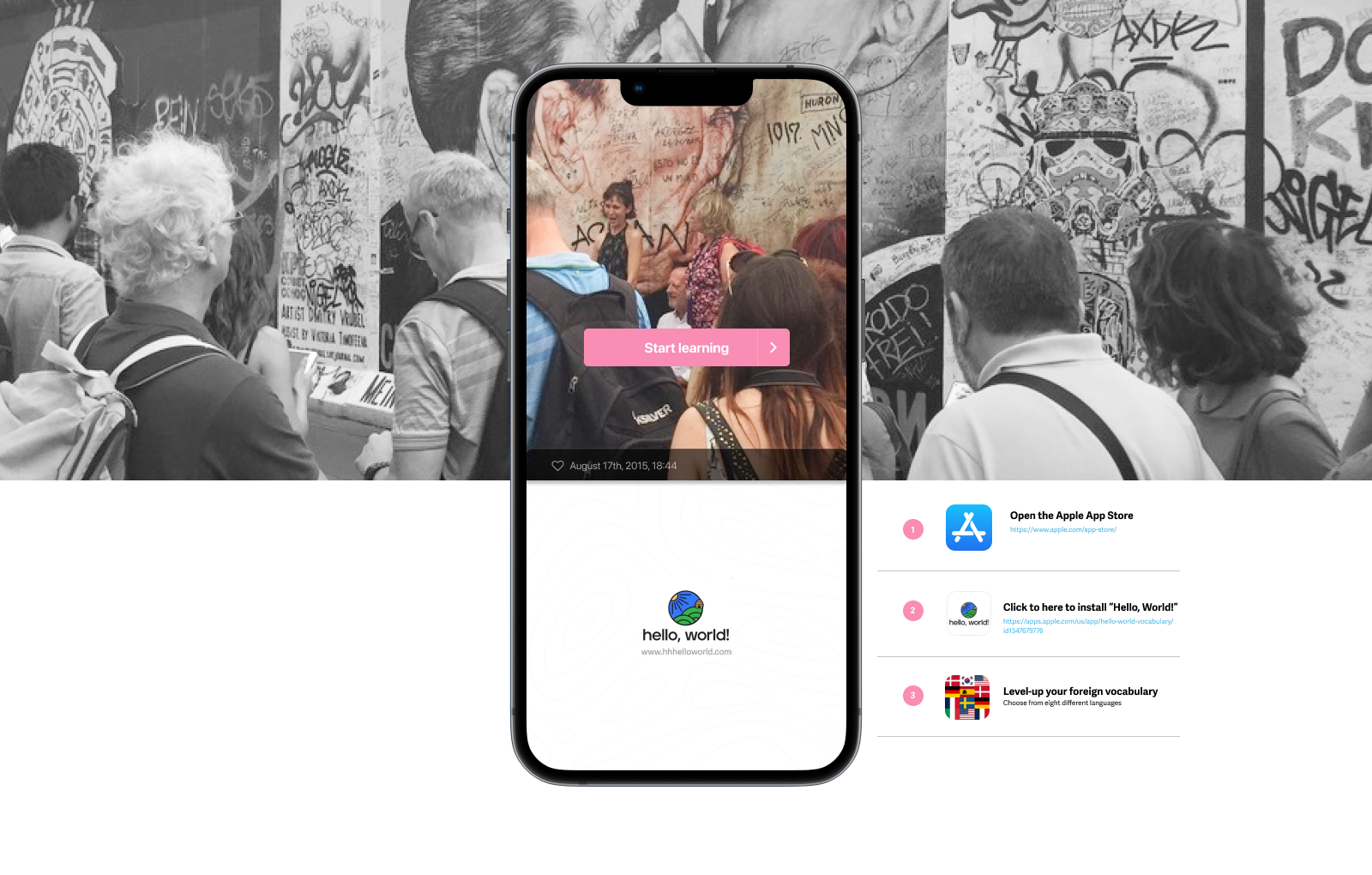
The product progressed from initial concept through development and launch on the Apple App Store, providing practical evidence that personalized learning could move beyond theoretical research into a usable digital experience.

The project also validated a broader product framework: educational technology does not need to optimize only for content delivery. It can be designed around how people acquire, retain, and apply knowledge.

By focusing on the learner’s existing experiences rather than generic educational materials, Hello, World! established an approach that could extend beyond language learning into other areas where personalization improves understanding and retention.

Outcomes

Hello, World! established a foundation for a different approach to educational product design—one where personalization is not treated as an additional feature, but as the core experience.

The project demonstrated that artificial intelligence can support more human learning experiences when it is applied to increase relevance and context. Rather than replacing educators or simplifying learning into automated interactions, technology can create environments that better adapt to individual needs.

The work also contributed to a broader perspective that continues throughout Jeremy Tai Abbett’s product and strategy work: successful technology products begin with an understanding of human behavior and then apply technology to amplify that understanding.

While Hello, World! began with vocabulary acquisition, the underlying principles apply to broader learning systems. As AI makes personalized experiences increasingly accessible, education can move toward models that support different interests, experiences, and learning paths while maintaining the scalability of digital platforms.

Principles

Design around human behavior

The most effective products begin with understanding how people think, learn, and make decisions.

Personal relevance creates engagement

Information becomes more meaningful when it connects to existing experiences and knowledge.

Technology should augment capability

The role of technology is not to automate human potential but to expand what people can achieve.

Personalization should be scalable

Individual experiences should not require individual resources when technology can enable adaptation.

Learning is an experience

Education is not only about transferring information. It is about creating conditions where people can understand, remember, and apply knowledge.

Research Context

Cognitive Science and Learning

Research in cognitive psychology demonstrates that learning improves when new information connects to existing knowledge structures. Context, retrieval, and meaningful associations play important roles in helping people retain information over time.

This research informed Hello, World!’s decision to use personal memories and photographs as learning anchors rather than isolated vocabulary exercises.

Artificial Intelligence and Personalization

Advances in artificial intelligence have enabled systems to generate personalized experiences at a scale that was previously difficult to achieve. In education, AI creates opportunities to adapt content, pacing, and recommendations based on individual learners.

Hello, World! applied this principle by using machine learning to create personalized vocabulary experiences without requiring manual creation of unique lessons for every learner.

Digital Education Transformation

The growth of mobile technology, cloud computing, and online learning platforms has changed expectations around education. Learners increasingly expect experiences that are accessible, flexible, and tailored to their needs.

Hello, World! explored how these technological shifts could support a transition from standardized learning systems toward more adaptive and human-centered educational experiences.

Product References

Relevant Research Areas

Personalized learning frameworks

Cognitive psychology and memory formation

Adaptive learning systems

AI-assisted education

Mobile learning experiences

In Zusammenarbeit mit

  • Alexander Höpker
  • Falco Winkler
  • Jeremy Tai Abbett